





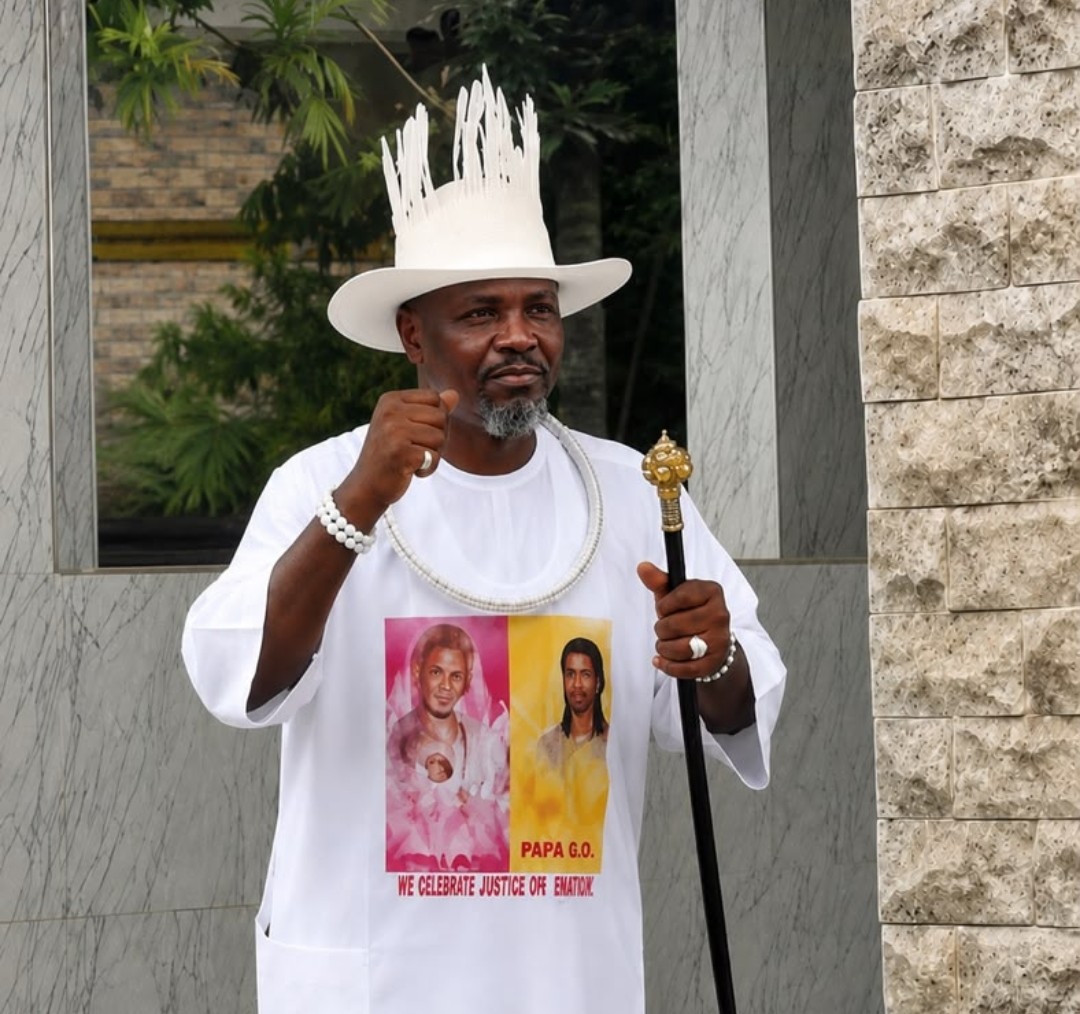
By Peter Omoh Dunia (Peter Black)
Nigeria’s recent commendation by the Nigeria Extractive Industries Transparency Initiative (NEITI) for meeting its Organisation of the Petroleum Exporting Countries (OPEC) crude oil production allocation for three consecutive months represents more than an encouraging industry statistic.
It is compelling evidence of what the country can achieve when government, security agencies, host communities and patriotic private-sector partners work together in the national interest.
For those who have closely followed the activities of Tantita Security Services Nigeria Limited (TSSNL), the development carries particular significance.
When Tantita was engaged in 2022 to support the protection of Nigeria’s critical oil and gas infrastructure, the industry was facing one of its most severe crises.
https://theintelligence.com.ng/2027-we-have-strategies-to-defeat-tinubu-says-apm/
Crude oil theft, illegal bunkering, pipeline vandalism and widespread sabotage had significantly weakened production, deprived the country of vital revenue and inflicted serious environmental damage on oil-producing communities.
Nigeria’s crude oil output had fallen to alarming levels. Illegal connections proliferated along pipelines and other critical infrastructure, while organised oil theft became increasingly sophisticated and audacious.
The Niger Delta was also paying a heavy price. Rivers and creeks were polluted by crude oil and illegal refining activities, while farmlands and fishing grounds suffered extensive damage.
Many communities were forced to live with the consequences of environmental degradation and soot from makeshift refineries.
It was against this difficult background that Tantita entered the field with a clear mandate: to support statutory security agencies in protecting the nation’s critical oil assets and help restore confidence in the Niger Delta’s operating environment.
Under the leadership and inspiration of High Chief (Dr.) Government Oweizide Ekpemupolo, popularly known as Tompolo, the Ibe-Ebidouwei of Ijaw Nation, Tantita brought to the task valuable knowledge of the terrain, community intelligence and an extensive grassroots network.
However, this was never a responsibility that Tantita—or any single organisation—could accomplish alone.
The progress being recorded is the result of a broader national security and industry partnership involving government institutions, security agencies, the national oil company, private-sector partners and host communities.
The Nigerian National Petroleum Company Limited (NNPCL), under the leadership of its Group Chief Executive Officer, Mr. Bayo Ojulari, has also provided institutional leadership and coordination in the execution of the mandate involving Tantita, statutory security agencies and other stakeholders in the campaign against crude oil theft.
Nigeria’s Oil Production Recovery
Yet, the difference since 2022 is difficult to ignore.
From the period when crude oil production fell to dangerously low levels, Nigeria has gradually recovered significant volumes.
Pipelines that were once routinely breached now receive increased surveillance, while illegal connections have been discovered and dismantled. Illegal refining sites have also been disrupted, contributing to an improved operating environment.
The benefits extend far beyond the creeks of the Niger Delta.
They are reflected in government revenues, foreign-exchange earnings, investor confidence and the wider Nigerian economy.
That is why Nigeria’s ability to consistently meet its OPEC production allocation should not be viewed merely as an oil-industry development. It is an important part of the country’s broader economic recovery story.
According to NEITI’s July 2026 reporting, Nigeria’s crude oil production averaged approximately 1.505 million barrels per day, with condensate adding about 170,000 barrels per day.
The report marked the third consecutive month in which Nigeria met or exceeded its 1.5 million barrels-per-day OPEC allocation, following improved production figures in May and June.
Significantly, improved pipeline security and reduced oil theft were among the factors identified as contributing to the production recovery.
That should matter to every Nigerian because every barrel recovered from thieves and vandals represents potential revenue for national development.
Security Agencies Deserve Recognition
It is equally important to acknowledge the wider security architecture that has made the progress possible.
The National Security Adviser, Malam Nuhu Ribadu, deserves commendation for strengthening intelligence-driven and inter-agency coordination.
His leadership has helped create a framework in which institutions and stakeholders responsible for protecting Nigeria’s strategic assets can work with greater coordination and common purpose.
The Armed Forces and other security agencies must also be recognised for their contributions.
The Chief of Defence Staff, General Olufemi Oluyede; Chief of Army Staff, Lieutenant General Waidi Shaibu; Chief of Naval Staff, Vice Admiral Idi Abbas; Chief of the Air Staff, Air Marshal Sunday Aneke; Director-General of the Department of State Services, Mr. Oluwatosin Adeola Ajayi; Inspector-General of Police, IGP Olatunji Disu; and Commandant-General of the Nigeria Security and Civil Defence Corps, Dr. Ahmed Abubakar Audi, represent institutions whose personnel continue to play important roles in combating oil theft and protecting critical national assets.
This is precisely why Nigeria’s oil-production recovery should be seen as a triumph of collective resolve.
Stop the ‘Bring-Him-Down’ Syndrome
Unfortunately, success can sometimes breed resentment.
I therefore appeal, particularly to our brothers and sisters in the Niger Delta, to put an end to campaigns of calumny and the destructive “bring-him-down” syndrome.
There must always be room for legitimate criticism, scrutiny and accountability. Tantita does not claim perfection, and no organisation entrusted with a public responsibility should be placed beyond scrutiny.
But criticism must be constructive.
Disagreement should never become an excuse to destroy what is working or undermine individuals and institutions whose efforts are producing measurable benefits for communities and the country.
Tompolo’s greatest strength has always been his deep understanding of the Niger Delta—its waterways, people, grievances, complexities and enormous potential.
Today, that knowledge is being deployed in defence of an asset on which the Nigerian economy substantially depends.
Stakeholders Must Sustain the Gains
The Federal Government, NNPCL, security agencies, traditional rulers, community leaders, youths and other stakeholders, particularly across the Niger Delta, must continue to support and encourage Tantita and Tompolo.
Protecting Nigeria’s oil infrastructure must rise above personal rivalries, politics and sectional interests.
The work is far from finished.
Every additional barrel protected from theft represents additional resources that can support roads, schools, hospitals and other national priorities.
Every pipeline secured strengthens investor confidence. Every illegal connection dismantled protects national revenue. And every young Niger Deltan persuaded that protecting national assets offers a better future than vandalising them represents another victory for peace and sustainable development.
Nigeria must learn to recognise and celebrate results.
If national honours are intended to recognise exceptional service with demonstrable impact on the country, then the transformation witnessed in the security of Nigeria’s oil infrastructure since 2022 presents a compelling case.
Tompolo—and, through him, the men and women of Tantita Security Services Nigeria Limited—deserve national recognition and honour.
Such recognition would not merely honour one man or one company. It would acknowledge thousands of ordinary Niger Deltans who are demonstrating every day that the people of the region can be trusted as guardians of the resources beneath their soil and waterways—resources that sustain the Nigerian commonwealth.
Finally, I commend President Bola Ahmed Tinubu for the confidence his administration has continued to repose in High Chief (Dr.) Government Oweizide Ekpemupolo and Tantita Security Services Nigeria Limited as important components of the collaborative security architecture for protecting Nigeria’s oil and gas assets in the Niger Delta.
The gains now being recorded demonstrate what is possible when political leadership, statutory security institutions, the national oil company, private security partners and host communities pull in the same direction.
Nigeria’s oil recovery remains a work in progress. But three consecutive months of meeting the OPEC production allocation provide something the country has badly needed: evidence that the tide can turn.
The challenge now is not merely to sustain the recovery.
It is to build on it.
And in that continuing national assignment, Tantita, Tompolo, security agencies, NNPCL and the communities of the Niger Delta deserve support—not campaigns designed to pull them down.
Peter Omoh Dunia (Peter Black), Chairman, Oceanwave Group, writes from Ogbona Community, Etsako Central Local Government Area of Edo State.

One thought on “Nigeria’s Oil Recovery: Tantita, Tompolo and the Triumph of Collective Resolve”