




Kogi East 2027: One-Horse Race as ADC’s QS Aminu Abubakar Suleiman Takes Early Lead
….Between Incumbency, Agenda and the Fight for Relevance
By Abu Oshiomieh
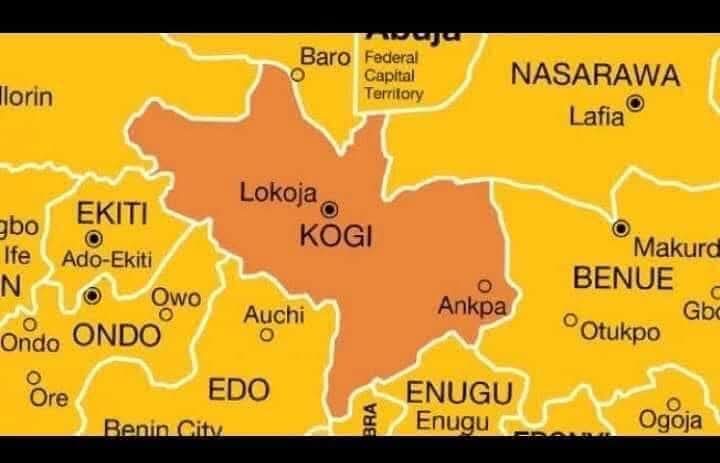
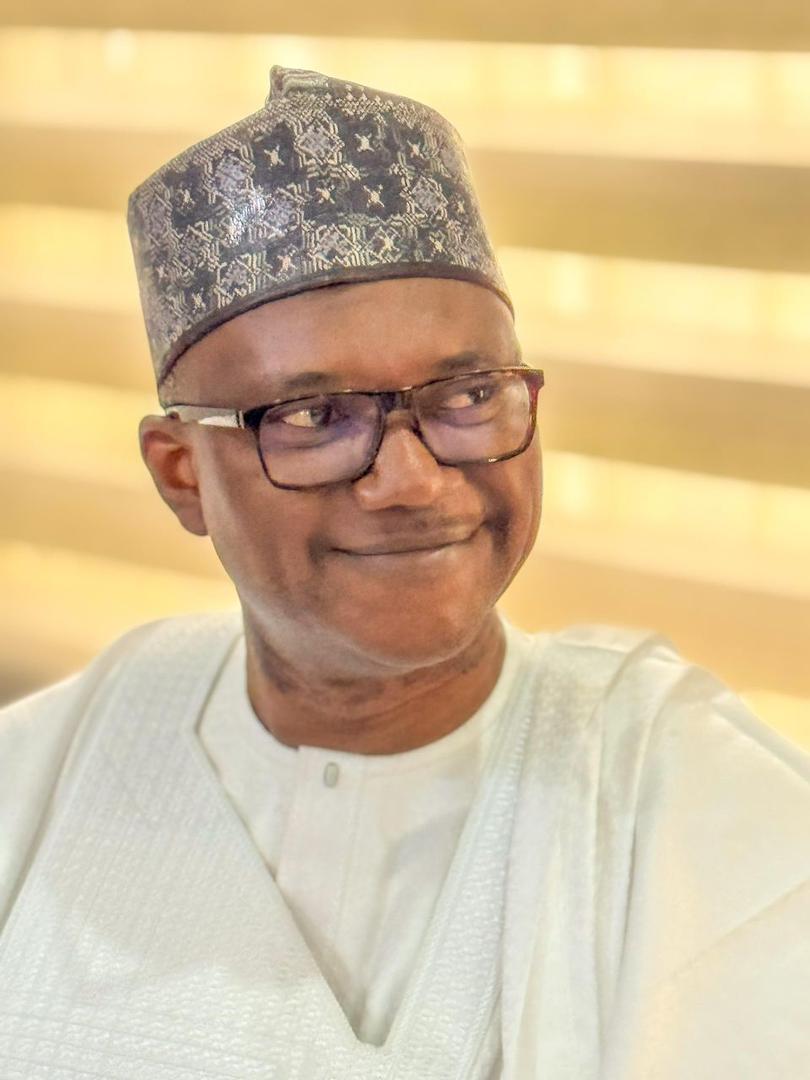
Though the 2027 Kogi East Senatorial election is still months away, political signals across the district’s nine local government areas are already pointing in a clear direction. If the election were held today, the African Democratic Congress (ADC) candidate, QS Aminu Abubakar Suleiman, would be the man to beat.
While the All Progressives Congress (APC) remains entangled in internal power struggles and the Peoples Democratic Party (PDP) continues to grapple with internal realignments, Aminu appears to be gaining momentum through strong messaging, grassroots engagement, and growing credibility.
Politics in Kogi East has never been driven solely by party affiliation. It has always revolved around personalities, public perception, and grassroots connection. As the 2027 race gathers pace, those three factors appear to be tilting the political pendulum in favour of the ADC.
QS Aminu Abubakar Suleiman enters the race with a notable advantage: focus. In a district increasingly frustrated by political rhetoric without results, his campaign is anchored on a development-driven agenda that speaks directly to Kogi East’s pressing concerns—security of lives and property, agricultural value-chain development, youth employment, and stronger federal investment in infrastructure and education.
That clarity has enabled him to shape early conversations. While potential rivals remain preoccupied with securing party tickets, Aminu is already engaging communities, traditional institutions, youth groups, and professional associations. This has significantly boosted his visibility across Igala, Bassa, and other communities in Ankpa, Dekina, Idah, Ofu, Olamaboro, Omala, Bassa, Igalamela/Odolu, and Ibaji.
In politics, early structure often outperforms late financial muscle. At the moment, Aminu appears to possess that structure. His early popularity, even before rival candidates have fully emerged, suggests a deep reservoir of goodwill. Should votes be protected, he could stage a major upset—particularly if the “Igala Agenda” politics that propelled Murtala Ajaka during the 2023 governorship race resurfaces.
Kogi East voters have repeatedly sent a clear message: they seek genuine representation, not political imposition.
As Chairman of Kaduna Electricity Distribution Company (KAEDCO), Aminu’s constituents are watching closely to see whether his position translates into tangible benefits such as transformers, rural electrification projects, and power interventions for communities still struggling with poor electricity supply. That institutional leverage, combined with his reputation for intellect and composure, gives him significant political capital—an uncommon asset for a first-time Senate contender.
The APC’s biggest challenge appears self-inflicted.
Incumbent Senator Jibrin Isah Echocho entered the Senate in 2019 with limited political capital. Many political observers recall that his career had waned until former Governor Yahaya Bello revived his fortunes. His tenure has largely been defined by loyalty to the state’s power structure—a position that has earned him political stability but also criticism for being overly deferential to dominant power blocs within Kogi and beyond.
His popularity in Igala land once soared, only to decline when he was increasingly perceived as disconnected from the grassroots. Although he now appears to be regaining his voice and leveraging the benefits of incumbency, two major issues continue to threaten his re-election bid.
First, he remains locked in a prolonged contest for the APC ticket with security chief Joe Erico. The perception of political imposition surrounding Erico has unsettled segments of the APC base. Though Erico lacks the incumbent’s legislative experience, the growing “puppet” narrative has created room for opposition candidates to expand their influence.
Until the APC resolves its internal divisions, it may struggle to present a coherent campaign.
Second, Echocho’s bid for a third term has not generated widespread enthusiasm beyond sympathy from loyalists. Voters are asking a fundamental question: What will be different this time? Incumbency without renewed performance is weak political currency in Kogi East.
The APC may still pride itself as the ruling party with influential figures and strong networks. However, history in Kogi East has shown that big names rarely guarantee victory when unity is absent. A fractured political base facing a focused ADC candidate presents a dangerous equation for the ruling party.
Within the PDP, political calculations remain fluid.
Alhaji Mohammed Abdullahi, popularly known as “Elephant,” possesses an established party structure and a foundation to build upon. Hussain Kashim Idris (HK), CEO of Crush Café Abuja, represents a younger and ambitious political generation with growing visibility.
Both command influence in different parts of the district. However, political watchers note that both still carry baggage from past controversies and have yet to fully convince voters they are ready to represent one of Nigeria’s largest ethnic blocs.
In a three-way contest, votes may scatter, but the central battle is increasingly shaping into Aminu versus whoever emerges from the APC.
Three major factors explain why Kogi East appears to be tilting toward Aminu.
First, voters are moving beyond party loyalty and increasingly demanding practical solutions. Aminu’s messaging around security, employment, and infrastructure resonates strongly with voter concerns across the district.
Second, the ADC currently offers what both major parties lack—internal stability. There are no major factional battles or legal disputes threatening its structure. This stability is attractive to both voters and financiers seeking predictability. The party also enjoys a quiet advantage from defections from the APC and the absorption of much of the PDP/SDP structures that emerged during the 2023 election cycle.
Third, after years of recycled leadership, many voters appear receptive to fresh leadership combining technical competence with grassroots empathy. Aminu’s background and early engagement suggest both qualities.
Yet political potential does not automatically translate into votes.
To convert goodwill into electoral victory, analysts say Aminu must expand his visibility beyond his Idah base and deepen engagement in key areas such as Dekina, Bassa, and Ankpa federal constituencies.
As political analyst Sullivan Enema notes, voters understand “the language of immediate intervention.” Presence at festivals, empowerment programmes, and visible constituency projects will matter greatly.
His low visibility during the recent Eid-el-Kabir celebrations attracted attention, although observers say recent efforts have improved engagement. In a constituency where Muslim support remains influential, visibility during sacred periods is often interpreted as commitment.
Critics also argue that Aminu may be constrained by a political circle perceived as relatively inexperienced in Kogi East power dynamics. To navigate the district’s complex political architecture effectively, he may need to broaden his advisory network and tap into deeper indigenous political intelligence.
As KAEDCO Chairman, expectations remain high. Constituents want tangible interventions—transformers, electrification, and empowerment programmes they can physically identify with.
In Kogi East, perception often follows visible impact.
It is still early in the race. Money, party structures, and federal influence will all shape the contest as political activities intensify over the coming months. Yet elections are increasingly won by narratives, and the dominant narrative today appears to favour change backed by competence.
The ADC could emerge as the dark horse if it successfully channels the momentum generated in 2023.
Senator Jibrin Isah still has incumbency and structure but must persuade voters that another term would produce better outcomes. HK and Elephant possess youth, ambition, and resources, but must overcome lingering public skepticism.
One lesson from 2023 remains clear: many Kogi East voters insist that 2027 should be less about violence and intimidation, and more about accountability and genuine representation.
The previous electoral cycle left deep scars, with many citizens accusing political beneficiaries of abandoning the very people who fought for change.
For now, the contest increasingly resembles a one-horse race.
QS Aminu Abubakar Suleiman currently holds the advantage.
The challenge for rival parties is no longer just about securing tickets—it is about whether they can catch up with a candidate who is already actively shaping the political conversation while others are still counting delegates.
Ultimately, Kogi East voters will decide in 2027.
But the early signals are difficult to ignore: agenda, unity, and credibility are increasingly outweighing incumbency.
And on all three fronts, ADC’s QS Aminu Abubakar Suleiman appears to be leading.