









Exploring the Other Planets: A Journey Through Our Solar System
Our solar system is home to eight fascinating planets, each with unique landscapes, climates, and mysteries that continue to captivate scientists around the world. Thanks to powerful spacecraft and advanced telescopes, NASA and other space agencies are constantly sending back breathtaking images and new discoveries that are expanding humanity’s understanding of the universe.
Mercury: The Closest Planet to the Sun
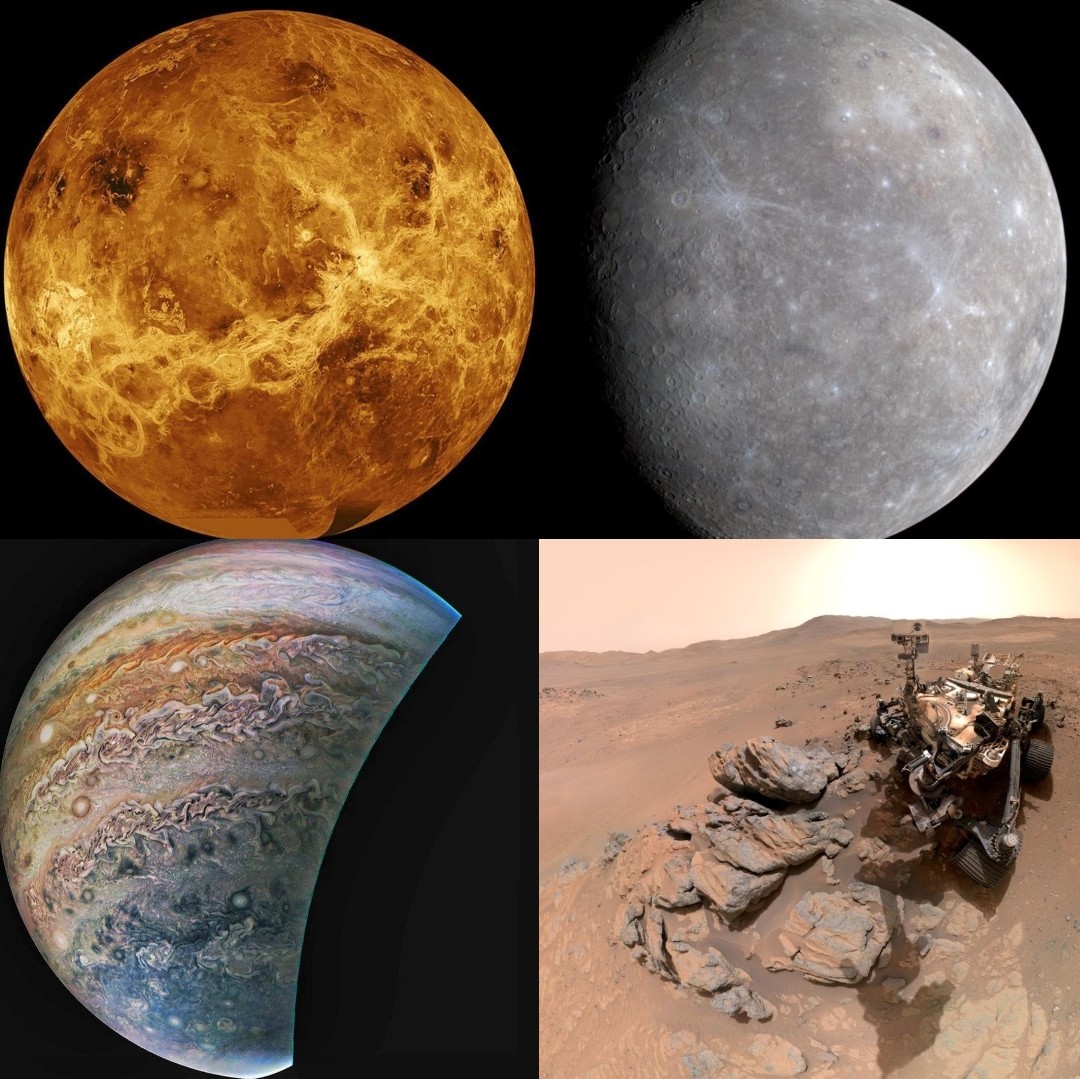
Mercury is the smallest planet in the solar system and the closest to the Sun. Its surface is heavily covered with craters, resembling Earth’s Moon. Temperatures on Mercury vary dramatically, reaching over 430°C during the day and dropping below -180°C at night due to its extremely thin atmosphere.
Venus: Earth’s Hotter Twin
Venus is often called Earth’s twin because of its similar size. However, it is the hottest planet in the solar system, with surface temperatures exceeding 460°C. Thick clouds of carbon dioxide trap heat through a powerful greenhouse effect, making Venus an extremely hostile world.
Mars: The Red Planet
Mars remains one of the most explored planets. NASA’s Perseverance rover continues to study ancient rocks, searching for evidence that the planet may once have supported microbial life. Scientists are also preparing for future human missions that could one day make Mars the first planet visited by astronauts beyond the Moon.
Jupiter: The Giant of the Solar System
Jupiter is the largest planet, containing more than twice the mass of all the other planets combined. NASA’s Juno spacecraft has revealed remarkable details about its powerful storms, magnetic field, and internal structure. Recent findings even show that Jupiter is slightly smaller than scientists previously believed.
Saturn: The Ringed Wonder
Saturn is famous for its spectacular rings made of ice and rock. Although the rings appear solid from Earth, they consist of billions of individual particles. Saturn is also home to more than 140 known moons, including Titan, one of the most promising places to search for signs of life.
Uranus: The Tilted Ice Giant
Unlike any other planet, Uranus rotates on its side, giving it extreme seasons that last for decades. The planet’s blue-green colour comes from methane gas in its atmosphere. Scientists believe Uranus may hide a vast ocean beneath its icy clouds.
Neptune: The Windy World
Neptune is the most distant major planet from the Sun. Despite its freezing temperatures, it experiences the fastest winds in the solar system, reaching speeds of more than 2,000 kilometres per hour. The deep blue colour of Neptune also comes from methane in its atmosphere.
Beyond Our Solar System
Astronomers continue discovering planets orbiting distant stars, known as exoplanets. In one of the latest breakthroughs, NASA scientists identified a massive planet called Gaia23bra b using gravitational microlensing—a technique based on Albert Einstein’s theory of general relativity. The discovery demonstrates new ways of finding worlds that traditional methods might miss.
With every new mission, humanity moves one step closer to answering one of the greatest questions ever asked: Are we alone in the universe? Future missions, including NASA’s Nancy Grace Roman Space Telescope, are expected to discover thousands more distant worlds and reveal whether some could be capable of supporting life.