
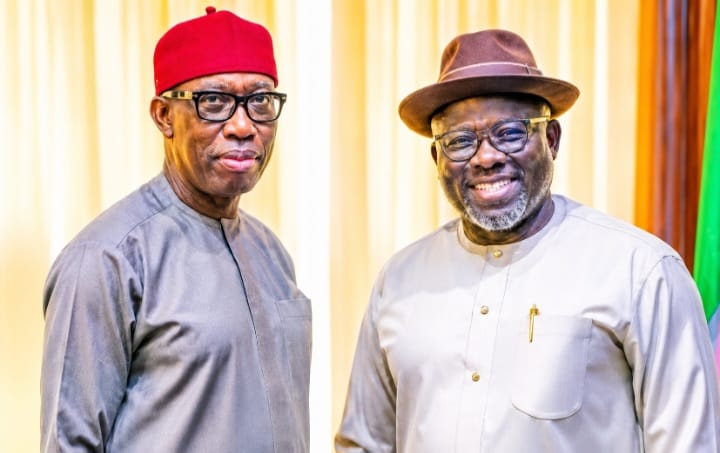
Oborevwori, Okowa Not Opposed to Anioma State Creation — Ifeajika
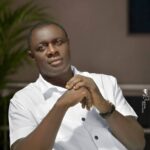
The Executive Assistant to Governor Sheriff Oborevwori on Public Enlightenment (Projects and Policies), Mr. Olisa Ifeajika, has dismissed claims that Governor Oborevwori and his predecessor, Ifeanyi Okowa, are opposed to the creation of Anioma State.
Ifeajika stated that, to his knowledge, the people of Anioma had not collectively expressed their support for the agitation for state creation in the current political dispensation, nor had they formally approached the governor with such a request.
Speaking during an interview on Politics HQ on News Central Television, Ifeajika said there is no record indicating that stakeholders behind the renewed agitation for Anioma State had officially briefed Governor Oborevwori or presented any correspondence or declaration reflecting the collective will of the Anioma people.
“A state governor ought to be aware when a section of the state he governs desires to become a separate state. But in this case, I am not aware that the promoters of the renewed agitation for Anioma State have consulted or briefed our governor.
“So, how can anyone claim the governor is opposed to an agitation he was never consulted about?” he queried.
On the position of former Governor Okowa, Ifeajika maintained that the former governor has consistently supported the agitation for the creation of Anioma State. He noted that throughout his political career, Okowa had worked in the interest of the Anioma people, including supporting calls for state creation.
According to him, Okowa’s stance on the renewed agitation remains clear and consistent.
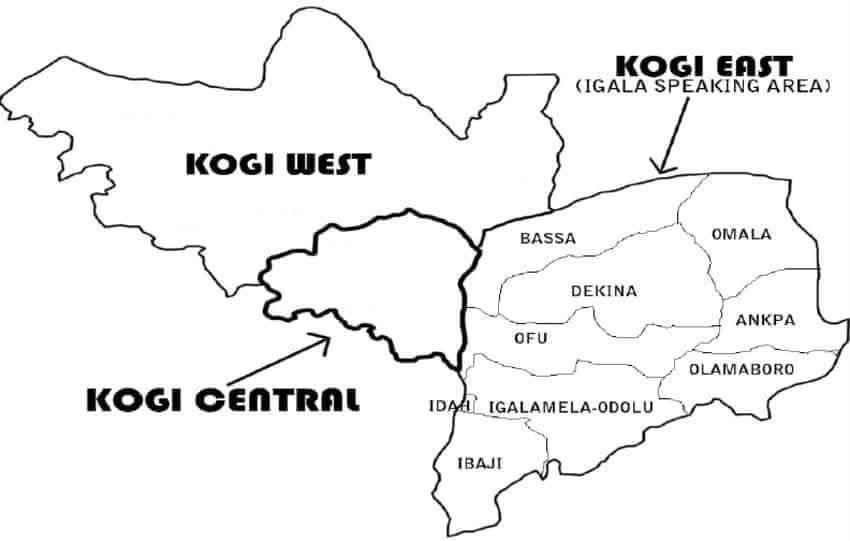
“Okowa’s position is that the Anioma State agitation he will support is one where the proposed state remains in the South-South geopolitical zone, with Asaba as its capital. There is no ambiguity about that position,” he said.
Addressing concerns over ethnic identity, Ifeajika stressed that the question of Okowa’s Igbo identity should not arise from the debate over Anioma State.
“Anioma State does not need to be in the South-East for Okowa and the rest of us to be recognized as Igbos. We are Igbos in Delta, just as there are Igbos in Rivers State. Being in Delta and the South-South does not make us less Igbo.
“It is the same with other ethnic groups. Take the Ijaws, for example—there are Ijaws in Ondo, Edo, Delta, Rivers, and Bayelsa states. They do not all need to be in Bayelsa before they are recognized as Ijaw,” he explained.
https://theintelligence.com.ng/delta-most-peaceful-state-for-oil-gas-business-in-nigeria-ifeajika/
Ifeajika cautioned against politicizing the issue of state creation, warning that the current agitation appears to be driven by selfish political interests rather than genuine public demand.
He emphasized that any credible agitation for the creation of Anioma State must be driven by broad consensus among stakeholders, including the people and the state government.
“It must come from the people. You cannot impose a state on the people. Everyone must be carried along and agree that they truly want a state in the form being proposed before the process can begin.
“Once there is genuine consensus, the governor and other stakeholders will naturally support it,” he added.
Speaking on Nigeria’s 27 years of uninterrupted democracy, Ifeajika urged Nigerians to remain committed to democratic ideals, describing the country’s democracy as a growing system that requires patience, collective effort, and active citizen participation.
He acknowledged existing challenges in areas such as the rule of law, human rights, and electoral credibility, but insisted that Nigeria has continued to make meaningful progress and should not be judged too harshly.
According to him, mistakes are inevitable in any evolving democracy and such shortcomings will gradually be corrected as the nation matures politically.
“Our democracy is still growing. We are learning and improving. Mistakes may occur along the way, but together, we will correct them and become better.
“Nigerians must have faith in the system because democracy is a journey. Citizens must participate actively in elections instead of withdrawing due to skepticism,” he said.
The governor’s aide further noted that voter apathy and widespread pessimism could weaken democratic development. He urged Nigerians to actively participate in elections if they desire competent and accountable leadership.
He explained that citizens ultimately shape the quality of leadership they get through their level of participation, adding that electoral reforms and voter education would further strengthen public confidence in the democratic process.
Reaffirming his optimism about Nigeria’s future, Ifeajika urged citizens to remain hopeful and committed to nation-building, expressing confidence that the country’s democracy would continue to grow stronger with time and increased public participation.