

There are only a few places where geography itself is an economic asset. Lokoja is one of them. The Niger and Benue meet here, while its location places it at an important intersection of road, rail, water and commercial corridors.
But I am not interested in simply describing Lokoja’s potential. I have looked at some of the projects and proposals already sitting within the federal system and the question for me is not whether Lokoja has potential. The question is: how do we move what already exists from proposal, planning and paperwork into implementation?
THE RAILWAY QUESTION
One of the important proposals I have identified is the Abuja-Baro-Itakpe-Ajaokuta-Warri Railway, with a proposed 41-kilometre branch extension from Jakura to Lokoja. The project received Federal Executive Council approval in 2018 under a PPP structure and the ICRC has documented the project within its PPP framework.
That cannot simply remain another item in a government document. As Senator, I would engage the Ministry of Transportation, the Nigerian Railway Corporation, ICRC and the relevant Senate committees to establish the current status, identify outstanding technical, commercial and financing issues and pursue the appropriate federal action.
Where legislative intervention is required, I will push it. Where budgetary attention is required, I will advocate for it. Where the bottleneck is institutional, I will bring the relevant agencies to the table and maintain oversight until there is measurable movement.
LOKOJA AS A LOGISTICS HUB
There is another proposal that deserves serious attention: the Lokoja Truck Transit Park. The project has featured in the federal PPP pipeline with feasibility work undertaken around its development.
For me, this is bigger than a truck park. Properly integrated, it can support logistics, cargo movement, road safety, warehousing, servicing, hospitality and small businesses. I would therefore pursue it as part of a wider Lokoja/Koton Karfe logistics strategy, rather than treating it as an isolated infrastructure project.
THE WATERWAY OPPORTUNITY
The federal PPP pipeline has also contained proposals around the Lokoja River Port and inland water transportation, including the development and management of river-port infrastructure involving Lokoja.
This is where Lokoja’s geography becomes an economic proposition. My role would be to engage the relevant federal agencies to understand what has stalled, what is actionable and what requires federal intervention, while working with the state government and private sector on complementary opportunities.
TOURISM IS ALREADY ON THE TABLE
The tourism conversation also does not have to begin from zero. Kogi’s 2026 budget contains provisions around a Tourism Development Master Plan, restoration of Lord Lugard’s Rest House at Mount Patti, rehabilitation of historical relics and cultural infrastructure in Lokoja.
My intervention would be to connect these state initiatives with the wider federal tourism and cultural ecosystem. Lokoja should have a properly structured heritage circuit around the Confluence, Mount Patti, its colonial history and other historical sites with conservation, interpretation, access, private investment and digital promotion working together.
THE BIGGER ECONOMIC PICTURE
I would not go to Abuja with a shopping list of disconnected projects. I would go with an economic argument: Lokoja/Koton Karfe can become an intersection of tourism, transportation, logistics, agriculture, commerce and investment.
The railway, river port, logistics infrastructure and tourism assets should therefore not be treated as separate conversations. They should form part of one economic strategy for the area. Legislation can address policy gaps. Oversight can demand accountability. Budget advocacy can draw attention to appropriate federal interventions, while strategic lobbying and stakeholder engagement can help remove institutional bottlenecks.
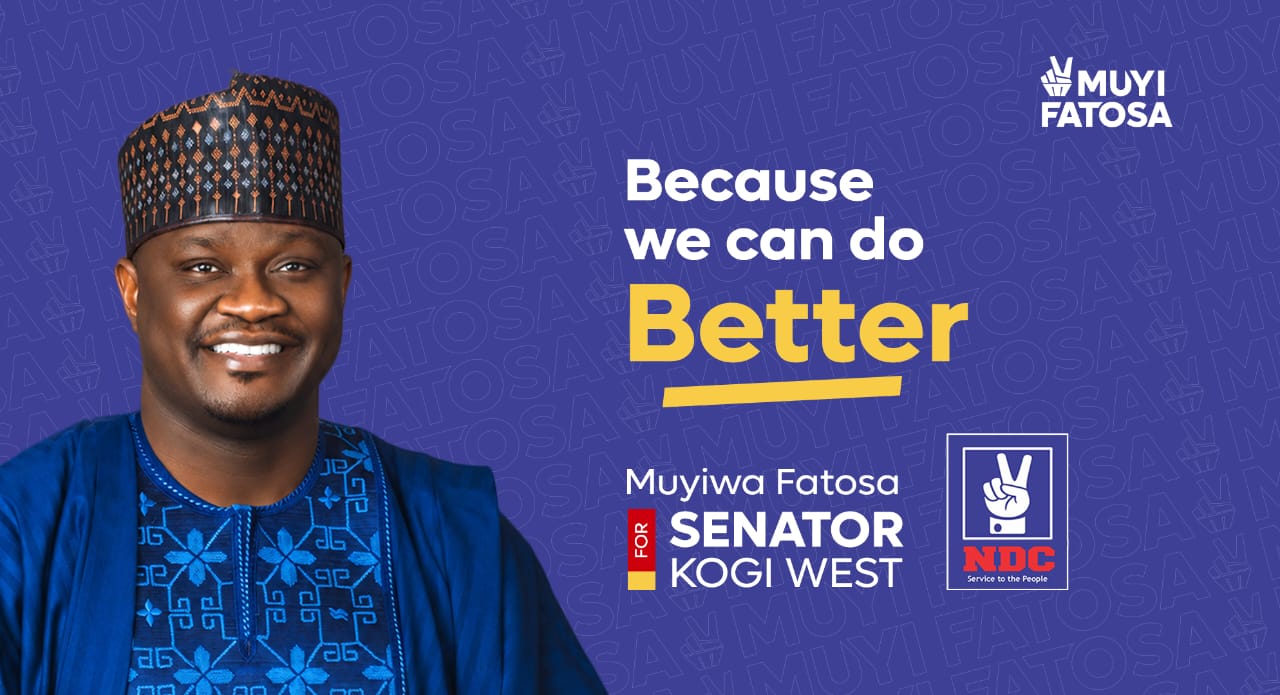
NDC Senate Candidate for Kogi West (2027)
This also requires a serious partnership with the Kogi State Government. The Federal Government, state government, local communities and private sector do not have to work in isolation when the objective is to build an economic corridor around Lokoja’s strategic advantages.
WHAT I WILL DO AS SENATOR
I will not promise to personally build a railway, construct a river port or execute a tourism project. That would be a misunderstanding of the office.
My job will be to legislate, oversee, advocate through the budget process, convene institutions and lobby strategically. I will use the Senate to ask where projects stand, why they are delayed, who is responsible, what funding is required and what government must do next.
My vision for Lokoja/Koton Karfe is therefore not a collection of disconnected projects. It is an economic corridor where rail connects to roads, roads connect to logistics, waterways connect to commerce, tourism connects to enterprise and agriculture connects to markets.
Lokoja already has the geography. Some of the plans already exist. Some are in development. Some require renewed attention.
My job is to understand the architecture, identify the bottlenecks and use the power of representation to move the conversation from what has been proposed to what can actually be delivered.
That is my plan for Lokoja/Koton Karfe.
SIGNED:
Hon. Muyiwa Fatosa,
NDC Senate Candidate for Kogi West (2027)