







2027 Election: Results Transmission and the Rise and Rise of Populism in Nigeria
By Elempe Dele
There have been back and forth arguments by Nigerians concerning the passage of the Electoral Bill Amendment on Wednesday. The topical issue is the transmission of election results in ‘real-time’ as against provisions of options when transmission is not possible in some areas where internet connectivity is weak or unavailable at polling units.
The opposition, as well as broad-based busy busybodies that now occupy the Nigerian space since the 2023 presidential election, are of the opinion that real-time transmission should be mandatory without the option of finding common ground on the occasion there is internet connectivity problems in some areas. This inconsideration makes soluble their envisioned prospect for better election experience in the country that will tackle the craving for rigging and manipulation by political actors.
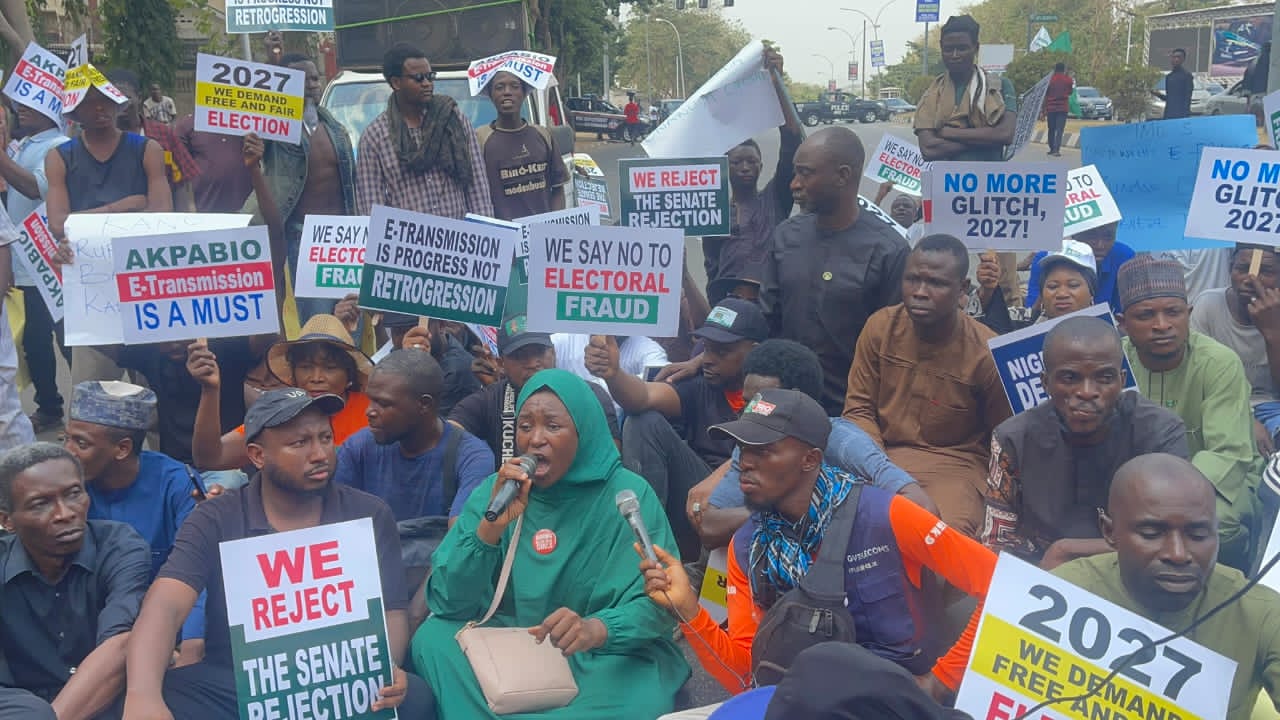
Again, some others who wish to make populist followings on the matter, including serving senators and their likes, have jumped into the barrels of guns lighting up the streets with their fireworks of no real-time transmission, no election, inciting the public to all kinds of protests. This mob incitement is expected as they have already tested what it takes to make mob arousal possible because critical thinking within the body is rare, or some times non-existent. For the benefit of readers, the mob under the context is the active crowd, not necessarily that with the killing aura.
But let us detain the thoughts and longings of those who have signed on to the populist mantra of ‘all are guilty, there no innocents’ so that we can discuss the issue critically.
In Nigeria, what happens is manual voting with ballot papers, the counting is done manually and the transmission of results is done digitally. As soon as voting closes, which is often put at 2:30pm, officials manually count the paper ballots in the presence of party agents and observers. This could take some time depending on the volume of votes secured in the polling unit. Then the final tallies are recorded on a physical result sheet (e.g., Form EC8A) A presiding officer uses dedicated tablet, the Bimodal Voter Accreditation System (BVAS)) to capture a digital image of the signed result sheet and upload it directly to the INEC Result Viewing (IReV) portal.
Now, here is the conundrum, which those who are ardently for mandatory real-time transmission of election results are not considering in their presentment. What happens when there internet connectivity challenges in specific areas? If we agree to the fact that this is a possibility, should we not be thinking of reflecting this in our Electoral Act, 2022, that is being amended? I read a joke yesterday which said some of those who have to climb trees and mountains in their various communities to access internet are calling for real-time transmission of election results. This was just humour strangling.
When there is internet connectivity challenges, the systems are designed with “offline-first” capabilities to manage areas with poor connectivity. The transmission device can store the encrypted result locally. Once the device moves to an area with a stable signal, it automatically uploads the data. Alternatively, If digital transmission fails entirely at the polling unit, the physical results are transported to a central collation center where they are then uploaded using more stable internet infrastructure. These alternatives or options makes it possible for results to be transmitted electronically and securely but not real-time or instantly. Unfortunately those who are ardently calling for real-time transmission are not providing any alternatives. They are hell-bent on disrupting critical analysis of our reality by being unreasonable particularly under the context of our internet connectivity challenges in the country.
Anyone who has ever worked with the Independent National Electoral Commission, INEC, in recent election after the introduction of the BVAS and the IReV will easily tell you the challenges they face in uploading results to the portal real-time time in some areas.
The other question we must ask is, what happens if we pass the bill into law making real-time mandatory and then some polling units are faced with this envisaged challenges of being unable to upload real-time, what do we do with such results? Do we cancel them because they were not sent real-time? Again, what exactly will be the benchmark for the said real-time transmission since we are not voting electronically? Two, three, four, five, six…hours after manual voting is concluded?
Rather than sit to discuss these issues so that stakeholders can arrive at some agreeable point, we seem to be shouting cacophonously across political isles. We are aware that some parts of the country lacks the consistent network coverage required for a strictly “real-time” legal obligation. Anyone denying this fact is disingenuous, even the Nigerian Communications Commission, NCC, acknowledged this fact recently but promising for continues expansion. This should be the basis for our rethinking of our assumption and conclusion that real-time transmission should be mandatory without any other alternative.