







The struggle for political equity in Kogi State has entered another contentious phase following a summit associated with the Kogi Unity Accord, which critics say ended with a call for Governor Usman Ododo to secure a second term in 2027.
For advocates of Kogi West’s governorship ambition, the outcome represents a departure from the spirit of the campaign that preceded it.
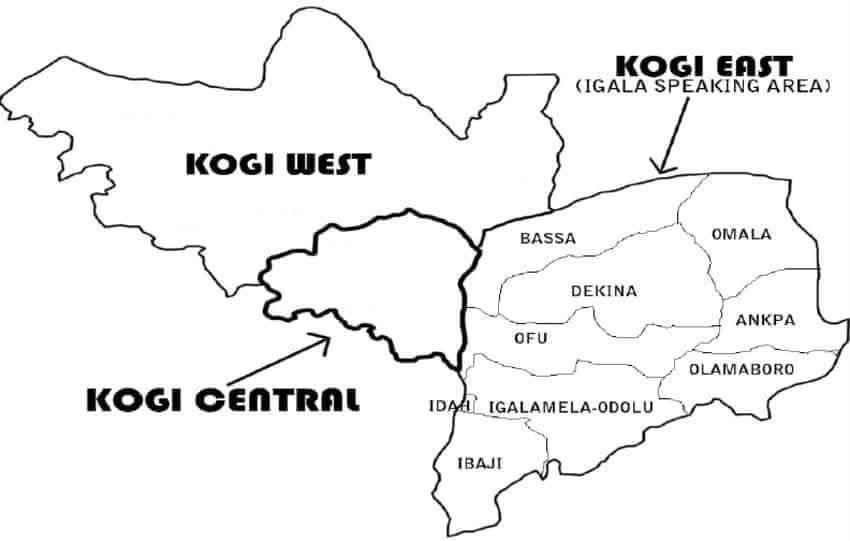
For nearly a year, Omoluabi, a Kogi West indigene, reportedly engaged stakeholders across the Eastern, Western and Central senatorial districts, promoting the argument that the governorship should rotate to Kogi West in the next electoral cycle.
His message centred on fairness, inclusion and the need to strengthen unity through a more balanced distribution of political opportunities.
The question now being asked by his critics is simple: if the mission was to build support for Kogi West in 2027, why did the process reportedly conclude with an endorsement that could postpone the district’s ambition until 2031?
The Politics of Unity and Equity
Unity is an important political objective, particularly in a state with diverse communities and competing regional interests. But unity can become controversial when stakeholders disagree over what it should mean in practice.
For the aggrieved Kogi West advocates, unity should involve creating a fair opportunity for the district to occupy Lugard House, the seat of the state government.
They argue that political harmony cannot be achieved by asking one constituency to repeatedly defer its aspirations while another seeks continuity in office.
The position reflects a broader debate about power rotation in Nigeria: whether political inclusion should be pursued through informal arrangements among political stakeholders or left entirely to electoral competition.
Those supporting rotation view it as a possible mechanism for building trust and preventing the marginalisation of particular regions. Opponents may argue that elections should be determined primarily by candidates, party processes and voters.
The disagreement in Kogi State therefore raises both a political question and a democratic one.
Why the Summit’s Conclusion Matters
Critics of the Unity Accord summit contend that the final communiqué failed to reflect the full range of opinions expressed in memoranda and stakeholder submissions.
They have challenged the legitimacy of a conclusion they believe favours Ododo’s second-term ambition over the demand for power rotation.
However, determining whether the communiqué accurately represented the summit requires access to the submissions, proceedings and the process used to formulate its recommendations.
Without that information, claims that the outcome was predetermined remain allegations rather than established findings.
Nevertheless, the controversy has created a serious challenge for advocates of the accord, who may need to demonstrate how competing interests were considered and how the final position emerged.
Kogi West Refuses to Wait Until 2031
The most consequential response has come from stakeholders who insist that Kogi West must remain in contention for the 2027 governorship election.
They have rejected the reported endorsement of Ododo’s second term and declared their intention to challenge for the governorship.
Their position is that the district’s aspiration should not be abandoned because a summit has reached a different political conclusion.
The challenge ahead is translating this declaration into an effective political movement. That will require consensus among aspirants, cooperation among party stakeholders, grassroots mobilisation and a credible policy agenda capable of attracting voters across the state.
The Road Ahead
The controversy surrounding Omoluabi’s tour and the Unity Accord summit illustrates how quickly a campaign for inclusion can become a dispute over representation, trust and political priorities.
For Kogi West, 2027 is no longer merely a date on the electoral calendar. It has become a focal point for a demand that the district’s supporters say has waited long enough.
https://gwg.ng/2026/10/10/and-tinubu-blinked/
Whether that demand gains broader acceptance will depend on political negotiations and the choices of Kogi voters.
One thing, however, is clear from the position of the dissenting stakeholders: they do not accept the reported second-term endorsement as the final word on the state’s political future.
Their message is that statewide unity must accommodate regional aspirations, and that Kogi West intends to pursue its governorship ambition in 2027.



One thought on “Kogi West 2027: Why Stakeholders Reject the Unity Accord’s Reported Endorsement of Ododo”