




ADC’s Ohikere to Politicians: Stop Panicking, Jonathan’s Eligibility Is Settled Law
By Tom Ohikere
The renewed agitation within Nigeria’s political corridors over the eligibility of former President Goodluck Ebele Jonathan ahead of the 2027 general election is a manufactured controversy that ought not to command even a fraction of national attention.
It is a debate sustained not by law, logic, or constitutional clarity, but by calculated mischief, partisan anxiety, and the deliberate distortion of legal facts that have long been settled by competent courts. Rather than arising from any genuine uncertainty within the Constitution, the controversy thrives on selective interpretation, strategic silence on binding judgments, and a willingness to blur established legal principles in pursuit of political advantage.
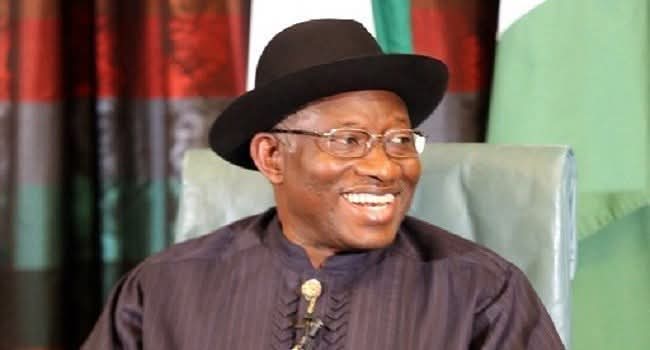
At the centre of this needless uproar is Dr. Goodluck Jonathan, the only holder of a doctoral degree to have occupied Nigeria’s highest office since the return to civil rule in 1999. His academic credentials, constitutional pedigree, and unique pathway to power are matters of public record. Yet, these facts have been willfully obscured by actors who benefit from confusion rather than clarity.
Tinubu’s Aide Warns Jonathan: ‘Those Urging You To Run In 2027 Once Drove You Out’
The ruling All Progressives Congress, through sympathetic voices and unofficial channels, has persistently attempted to muddy the waters by reviving an issue long settled by law. This effort to peddle uncertainty over Jonathan’s eligibility has nothing to do with constitutional interpretation but has everything to do political calculation, driven by fear of a familiar name and a proven electoral appeal.
The truth remains straightforward. Former President Goodluck Jonathan is as qualified and eligible to contest the presidency as any other Nigerian who meets the constitutional requirements. Any suggestion to the contrary is a conscious misreading of the law or an outright falsehood intended to mislead the public.
The claim that Jonathan has exhausted his constitutional tenure rests on a flawed understanding of succession, tenure, and retroactive application of law. It ignores the legal distinction between completing an unexpired term and being elected to a full term, a distinction that Nigerian courts have already examined and resolved.
More concerning than the reports themselves is the tendency to present speculation about former President Goodluck Jonathan’s political future as settled fact. As a citizen of the Federal Republic of Nigeria, he possesses the full constitutional right to align with any political party whose values, philosophy, and programme accord with his convictions. Any discussion of his political choices must therefore begin with respect for that freedom rather than presumption.
Political maturity requires recognition that former presidents are not bound by perpetual partisan immobility. They may, at their discretion, remain within the political traditions that brought them to office, or reassess their alignment in response to changing national realities. Should Jonathan ever consider engagement beyond his former platform, such a decision would be guided by principle and conscience, not by a search for relevance or convenience.
The African Democratic Congress occupies a legitimate place within Nigeria’s democratic landscape and represents an alternative platform for citizens and leaders who seek different approaches to governance. As with many growing political parties, it continues to strengthen its internal structures and clarify its ideological direction, a process that reflects democratic evolution rather than institutional weakness.
It is therefore important to resist the impulse to insert Goodluck Jonathan into speculative political rivalries or imagined contests for dominance. His record shows a consistent preference for stability, dialogue, and national cohesion. Any political association he chooses, or declines, would be rooted in these values rather than in tactical calculations or transient alliances.
At the same time, Jonathan’s longstanding relationship with the Peoples Democratic Party remains an established part of his political history. The party shaped his rise and provided the platform for his service at the highest level. Whether he chooses to remain within that tradition or explore other democratic platforms remains entirely his prerogative, and should be reported with restraint, accuracy, and respect rather than conjecture.
Beyond partisan conjecture, the legal position on Jonathan’s eligibility is even clearer. A competent court of law sitting in Yenagoa, Bayelsa State, conclusively determined that he is constitutionally qualified to contest for the presidency. That judgment has not been appealed and therefore stands as binding authority.
The judgment delivered by the Yenagoa court remains the prevailing statement of the law on this matter. Until it is overturned or set aside by a court of superior jurisdiction, it binds all parties, public institutions, and subsequent legal proceedings across the federation. Any effort to reopen the same question before another court of coordinate jurisdiction is not only improper but fundamentally flawed in procedure, as it seeks to undermine the finality and authority of a valid judicial pronouncement.
The reliance on Section 137(3) of the 1999 Constitution, as amended in 2018, has been particularly misleading in public discourse. That provision clearly restricts individuals who have been sworn in twice as president from seeking re-election. What is often omitted, however, is the decisive issue of timing, without which the provision cannot be properly understood or applied within a constitutional framework.
When Goodluck Jonathan took the oath of office in 2010 to complete the unexpired tenure of the late President Umaru Musa Yar’Adua, the constitutional amendment in question had not been conceived, debated, or enacted. When he subsequently contested and won the 2011 presidential election and was sworn in again, the legal position remained unchanged. At no point during those oaths was there an existing constitutional bar limiting his eligibility.
The legal principle governing this issue is basic and well established. Laws do not apply retroactively unless such intention is expressly stated in clear and unmistakable terms. Constitutional amendments, powerful as they are, do not possess the authority to nullify actions that were lawful at the time they were undertaken under an earlier legal order.
As Senior Advocate of Nigeria, Oba Maduabuchi, correctly noted, the controlling consideration is the state of the law at the moment the relevant acts occurred. In both 2010 and 2011, no statutory or constitutional restriction existed that could prevent Jonathan from assuming office or from pursuing his constitutionally guaranteed tenure. His actions were fully compliant with the law as it stood.
The amendment introduced in 2018 cannot, by any sound legal reasoning, be extended backward to affect oaths taken many years earlier. To advance such an argument would weaken the principle of legal certainty and expose the constitutional system to instability, where settled rights could be reopened based on future legislative changes.
The fresh suit instituted in Abuja, which seeks to restrain the Independent National Electoral Commission from accepting Jonathan’s nomination, therefore lacks legal substance. It does not advance the public interest nor raise a novel constitutional issue. Rather, it functions as a distraction that shifts attention away from substantive political engagement toward avoidable legal theatrics.
Such actions impose unnecessary burdens on the judiciary and diminish public confidence in the legal process. They also reveal a troubling inclination to replace coherent legal reasoning with political anxiety, thereby weaponising the courts in contests that ought to be resolved through democratic persuasion.
It is equally significant that no appeal has been filed against the Yenagoa judgment. This absence of appellate challenge speaks volumes. It suggests a tacit recognition by interested parties that the decision rests on firm legal ground and is unlikely to be overturned upon closer judicial scrutiny.
Another senior lawyer, human rights advocate, and former Vice President of the Nigerian Bar Association, Dr. Monday Onyekachi Ubani, has reinforced the legal position that there is no constitutional provision disqualifying former President Goodluck Jonathan from contesting the 2027 presidential election.
Focusing strictly on the law, Ubani clarified that the constitutional arguments often advanced against Jonathan’s eligibility are based on a misapplication of relevant provisions. According to him, a careful and objective reading of the Constitution shows that the restriction relied upon by critics does not apply to Jonathan’s circumstances.
“My legal opinion on Jonathan’s eligibility is not a validation of whether I would want him to run or not. President Jonathan is clearly eligible to run,” Ubani stated, drawing a clear line between personal political preference and constitutional interpretation.
He explained that Jonathan’s assumption of office in 2010 followed the death of President Umaru Musa Yar’Adua and was carried out strictly in line with Section 146 of the 1999 Constitution. That oath, he noted, was not the product of an election but occurred by operation of law to complete an unexpired tenure.
Ubani further emphasized that it was only in 2011 that Jonathan contested and won a presidential election, an event that constituted his first and only electoral mandate. On this basis, he concluded that no constitutional barrier exists to prevent Jonathan from seeking the presidency again under the current legal framework.
What therefore remains unresolved is not a constitutional dilemma but a political calculation. The persistence of this controversy reflects discomfort in certain quarters with the prospect of Jonathan’s renewed visibility within national politics rather than any genuine uncertainty about the law.
Nigeria deserves a higher standard of public debate. Democratic competition should be anchored in ideas, performance, and lawful processes, not sustained by distortion of judicial decisions or selective reading of the Constitution.
Former President Goodluck Jonathan attained office through constitutional means and discharged his mandate within the boundaries of the law. Whether he chooses to participate in the 2027 election is a matter of personal judgment and political strategy. His right to make that choice, however, is firmly established and no longer subject to legitimate dispute.
Such moments of political agitation are not without precedent. Across democratic systems, prominent figures who retain public goodwill often attract legal and political resistance long before they make any formal declaration. History offers clear examples, including the experience of Donald Trump, who faced sustained legal and political pressure yet proceeded to secure a decisive electoral victory.
These political episodes underline a familiar pattern in politics. When influence remains strong, opposition frequently shifts from open competition to procedural and narrative obstruction. In that sense, the intensity surrounding Goodluck Jonathan reflects not vulnerability, but the enduring weight of his political relevance.
What is particularly striking, however, is that this anxiety persists despite the absence of any public declaration by Jonathan of an intention to contest the 2027 presidential election. The ruling All Progressives Congress appears unsettled by a candidacy that exists largely in speculation rather than in fact. This reaction suggests a fear of possibility rather than reality.
Regardless of conjecture, one point remains clear. No amount of legal maneuvering or political noise can extinguish a constitutionally protected right, and no campaign of uncertainty can preempt a decision that has not yet been made.
In the end, the law has spoken, the courts have ruled, and the facts are clear. Everything else is noise.
Dr Tom Ohikere, is a veteran Media Consultant and a chieftain of ADC.